The 7 Most Common Defenses in Football
Coaches have different philosophies on defensive formations, based on the players they have, what they're expecting out of the opposing offense and what they feel most comfortable with.
In most cases, it's one of seven different formations. Here's a breakdown of each one and why coaches may choose them come game day.
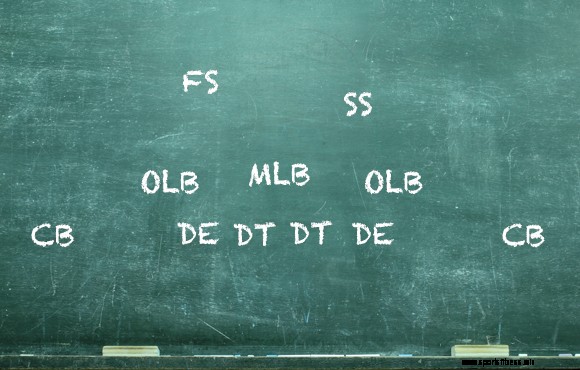
The 4-3 is the most commonly used defense at the upper levels, including the NFL. At lower levels the 4-3 is not particularly popular because many coaches consider it weak against the run due to the fact there are only four down linemen. At the higher levels, the quality and size of the average down linemen makes this a non-factor. In essence, if a team possesses the size, strength and quickness necessary to run the 4-3 defense, it is a formidable formation.
Besides the ever-present four down linemen (2 tackles and 2 ends), there are three linebackers—two to the inside and one at the outside shoulder of the tight end. Two cornerbacks and two safeties are the standard. Equally effective against most all offensive formations, the 4-3 is the default defense of choice for this author. It is easily modified for various offensive sets. The third linebacker (on the tight end) can cover the tight end, blitz or cover any of the short zones to that side or the hook zone over the middle. The cornerbacks can blitz with the safety(s) assuming the corner's responsibilities. Or a corner can drop back in deep coverage allowing a safety blitz.
Because of its high flexibility, an offense will find it difficult to isolate a particular area or defensive player. If the 4-3 has a weakness, it is that the inside linebackers are the primary tacklers for runs between the tackles and they are, of course, four to five yards off the ball.
 sports